
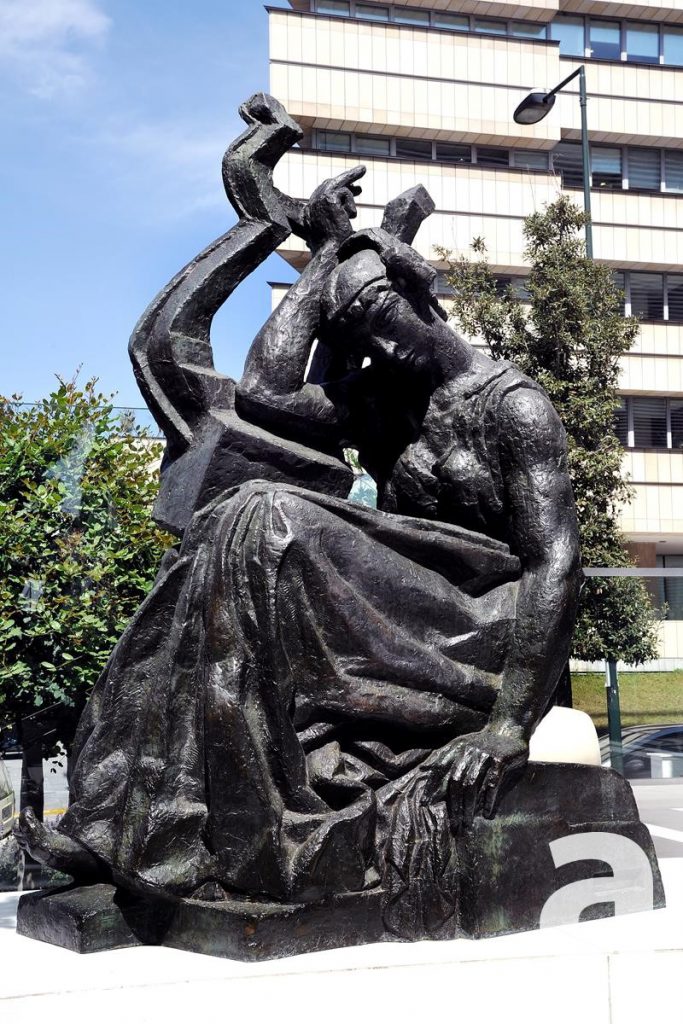
Sappho (also called “Sappho the Lesbian” from her place of origin) (~ 630 BC – 570 BC), was the most important lyric poet of antiquity, originating from Lesvos, especially known to this day for her poetic work. her name in modern times has been associated with lesbian love.
A lyrical reminder
In times when the romantism and inspiration of everyday life, Sappho’s sculpture looks like a lyrical reminder. Seemingly calm, but the movement resulting from the raised big toe and ending in her right hand creates a complex dynamism. Bent over her lyre – as if she is trying to feel it. The folds of her dress pulsate with her restless spirit – along with the strings of her lyre. Her muscular, strong and determined hands may comment on the great conversation that has arisen about her sexuality. If sculpture could take life for a while, what notes and lyrics would it give us? Would it be full of spontaneity, passion and strong emotions as her poems used to be in antiquity? Or will it have been drowned out by the exhaust gas and the tall buildings that hide the sun? What could be worse for an artist than to end up as a brass sculpture, unable to move, express and fall in love? The optimistic thing is that she gave her name to an asteroid discovered in 1864: 80 Sappho. So we can imagine that she continues to write love poems from somewhere more atmospheric than the anorgasmic Earth.
Courtyard Onassis Stegi, 107-109, Syngrou Ave.
Sculptor:
Antoine Bourdelle
Material: Brass